
How Boys Learn
“All he wants to do is stare at a screen”
“I can’t get him to focus on his homework”
“He just doesn’t seem as motivated as my daughter”
If you’re raising a boy, chances are that you have heard or said something like this about your son. In 2023, the Organization of Economic Cooperation and Development released a report examining the ongoing gender disparities in education, focusing on, among other things, teenage boys’ underperformance compared to girls. We know, though, that boys can be curious, inventive, funny, and wildly energetic learners. So, why the disparity?
Stereotypes encourage lower expectations and excuses for why learning can be difficult. Fundamentally, understanding how boys learn isn’t about making excuses or lowering expectations. It’s more about working with their natural tendencies and understanding where they are developmentally to help them succeed.
Boys’ Relationship with Learning
Boys aren’t in any way less capable than girls. They just tend to follow a different developmental timetable, particularly in early childhood and through adolescence. On average, boys’ brains mature more slowly in areas related to language, fine motor skills, and executive functioning skills. Through the primary and middle school grades, teachers and parents act as a boy’s executive function by controlling the structure of their day and assignments. But, by the start of high school, executive functioning skills such as completing homework and coming to classes prepared are required for long term success.
Author of Failure to Launch, Mark McConville, has shared many times that these frontal lobe skills develop over time like popcorn. You may see a burst of organization, deep thinking, or understanding, and then it might be a while until you see it again. All hope is not lost, though! Executive function skills can be taught and scaffolded. Believe it or not, your son is watching you and making mental notes. The habits you keep in organizing your day-to-day life are ones that can help him be organized. Use a family calendar (either virtual or a paper/dry-erase one) to help track familial obligations. Then, ask your son what type of planner he might want to track his own obligations and assignments. While school-provided online learning management systems are great for tracking what is missing, they aren’t always helpful when trying to organize, predict timing, and manage long-term assignments. Help your son by asking questions about his organizational processes, and praise his successes - even if they are small!
A boy’s development of executive functioning skills may impact his ability to be a completely independent learner, but his ability to learn is still intact and growing. This doesn’t mean you should take over planning his daily life, but you could tune into how and when you can float between being the director of his life versus when you can become a consultant to it. For instance, if your son often forgets his materials at home, don’t fall into the trap of rushing around in the morning to grab what he needs or dropping it off at school later in the day. Think about inviting him to a conversation of what he might need for the next day, prompt for things he might not remember, and help him plan/organize it all out in the evening. After all, you can’t learn for him, and your goal should be to encourage independence.
Motivation and Engagement
How can a boy focus on a video game, building LEGOs, or memorizing sports stats yet struggle to sit for 45 minutes to complete his homework? He finds value and can see an end goal in each of those given examples. We all want our boys to feel internal motivation to learn. And yet, boys may sometimes identify more with external motivations. While some may be motivated by their own joy of discovery and curiosity, others may find initial motivation in validations like adult affirmation. As boys grow through adolescence, their academic motivation may shift to more external factors like getting into college or finding a career path. These external factors often create tension and pressure that take the joy out of learning. In his book Drive: The Surprising Truth About What Motivates Us, Daniel Pink identifies relevance and purpose (“why should I care about this?”), autonomy (“do I have any control over this?”), and competence (“what will people think if I fail?”) as factors that motivate behavior.
Without understanding how a task relates to their own lives, students may find abstract work irrelevant and struggle to connect with it. Teachers and parents can help identify why things like homework or assessments matter, the purpose they serve, and how they are relevant to a student’s life. Further, the grind of daily life for a young man can involve school, sports or extracurricular activities, religious commitments, and family time. With only 24 hours in a day, this leaves little time for choice and autonomy. Allowing boys some voice in the timing and/or planning of when and where they do their school work can lead to more motivation to complete it. Years of research on growth mindset inform us that we need to normalize mistakes and link failure and falling short to finding success in the long term. When boys feel that they might fail and that they will be judged on their performance, they are less likely to try and more likely to act like they don’t care.
In short, when boys understand why things matter, feel some ownership over the process, and are confident in their ability to try and make mistakes, they are more likely to engage and find their own internal motivation for learning.
Why Relationships Matter
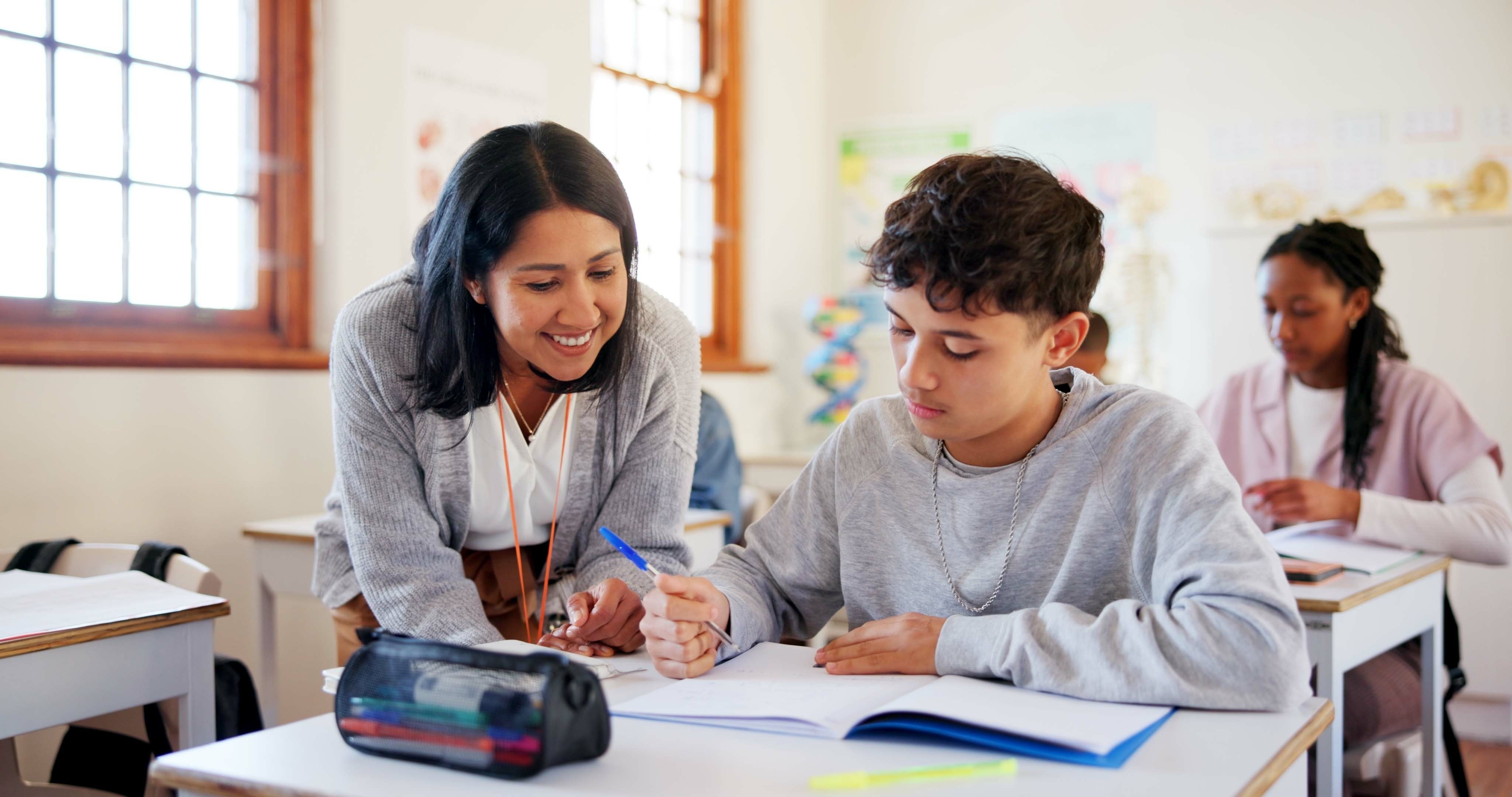
Another developmental learning curve is the student-teacher relationship. It takes time for boys to develop trust in their relationships with teachers to a degree that they become willing to put themselves out there and take chances. And at the same time, we know that the most meaningful learning and character growth comes from situations in which there is a solid and safe relationship. Michael Reichert, well-known author and researcher on boys’ learning, notes that “[b]oys will give up trying if they don’t believe that someone really ‘gets them’ and cares about how they’re doing.2”
When a teacher or mentor takes time to foster and build relationships with and among their students, boys learn to trust themselves and others, work to inspire their peers, and push each other appropriately. It is in these relationships that they feel known and understood. When they hear guidance and encouragement from those with whom they have relationships, it makes them more likely to value it and seek out that growth and development. Relationships matter because they create the support system for boys to trust themselves and their learning environment. Boys also are more likely to put in effort towards classes and work that is given by teachers with whom they have a connection.
We obviously don’t control the relationships our sons are building at school, but we do help frame them when we talk about it at home. Encouraging boys to engage with their teachers and to trust that their teachers want what’s best for them helps set the stage for those relationships to thrive.
Boys do not follow a single developmental path, and it’s difficult to categorically define how boys learn. These research-based strategies help position boys to find internal motivation, foster positive relationships, and perform their best.
- Make learning active. Don’t fight a boy’s desire to move. Let him read or do his work while standing, tossing a ball, or lying on the floor.
- Offer choices and ownership. Give options for studying and engaging with homework. While some boys may need more structured involvement from a parent, he should still have some ownership in his learning.
- Approach from inquiry. Connect before you correct. Adults have often “been there, done that” and will seek to correct before asking questions about why a boy has made a specific choice. If a boy feels criticized, he will shut down and not be willing to hear any advice. Instead of saying “if you don’t start, you’ll never finish.” Try: “why are you hoping to wait until later? Do you think it would help if we set a timer for 25 minutes and see how much you can finish?”
- Praise effort not outcome. Self-confidence plays a large part in how and when boys find joy in learning. A bad grade or negative outcome will prompt a boy’s own self-reflection and negative reaction. Encourage and praise the effort. Discuss preparation and strategies instead of a grade. Remember too, comparing your son to others is a losing game. Make sure to compare today’s version of your son to last week’s or last month’s version. You will certainly see growth and progression.
- Scaffold organization skills. When adolescents are not developmentally ready to manage their own school work and schedules, they may not be able to see the outcomes they are hoping for. Providing structure and organization can offer training wheels in those moments as boys work towards managing it on their own. The goal, of course, is for your son to be independent over time.
- Partner with teachers. Encourage positive relationships and discuss school and his teachers in a positive way. Work together with teachers to share insight on strategies that are working for consistency between home and school.
Regardless of the age of your son or what developmental stage he is in, finding value in, motivation for, and a love of learning is an important part of his long term success.
The conversation continues on the Boys Education Series podcast! Listen on Apple Podcasts and Spotify. Subscribe on your favorite streaming platform.
Citations
2. https://www.on-boys-podcast.com/why-now-is-the-best-time-to-raise-boys-w-michael-reichert/
Betsy Hauptman Coy has almost 20 years of experience teaching at both independent schools and at the collegiate level. She earned her B.S. from Bowling Green State University in Special Education, her J.D. from Case Western Reserve University, and completed a graduated program in brain-based learning and education at Johns Hopkins University. Betsy is currently the Upper School Dean of Students and Ninth Grade Dean at University School where she has served in roles ranging from classroom teacher to Director of Learning Services.
%20Need%20to%20Unplug%20and%20Venture%20Outdoors.jpeg)